Key takeaways
- Entry is guided only, in timed slots — no walk-ups, no free roaming. See when you can go and how to reserve.
- The €9 Patrimonio Nacional ticket is the direct way in — buy at tickets.patrimonionacional.es or at the desk on the day.
- Closed Mondays every single week — open Tuesday–Saturday 10:00–14:00 and 16:00–18:30; Sunday 10:00–15:00. Full schedule by day and season.
- Free Wednesday and Thursday 16:00–18:30 for EU citizens and Ibero-American visitors — bring your passport. It gets crowded. What free-entry afternoons are actually like.
- Juana de Austria, María de Austria and Margarita de la Cruz are all buried here — the single biggest search question. The full story of three Habsburg women.
Where the guided visit takes you
The Descalzas Reales, stop by stop — what you see, in order, on a typical 60–90 minute visit.
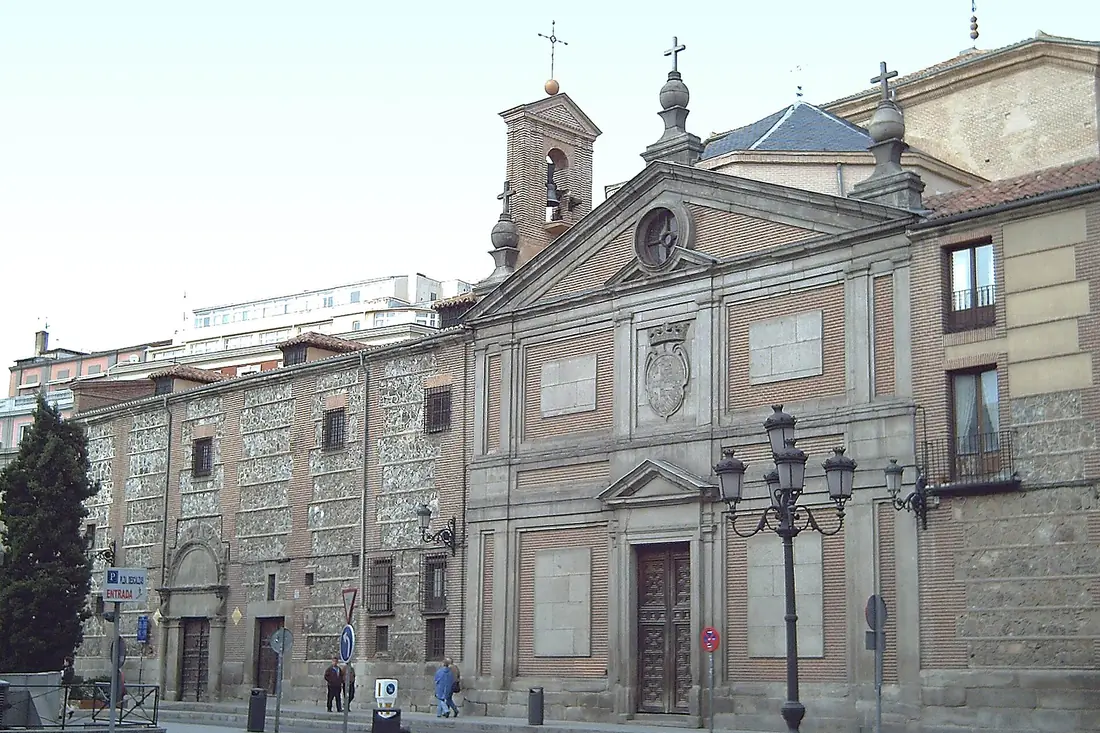
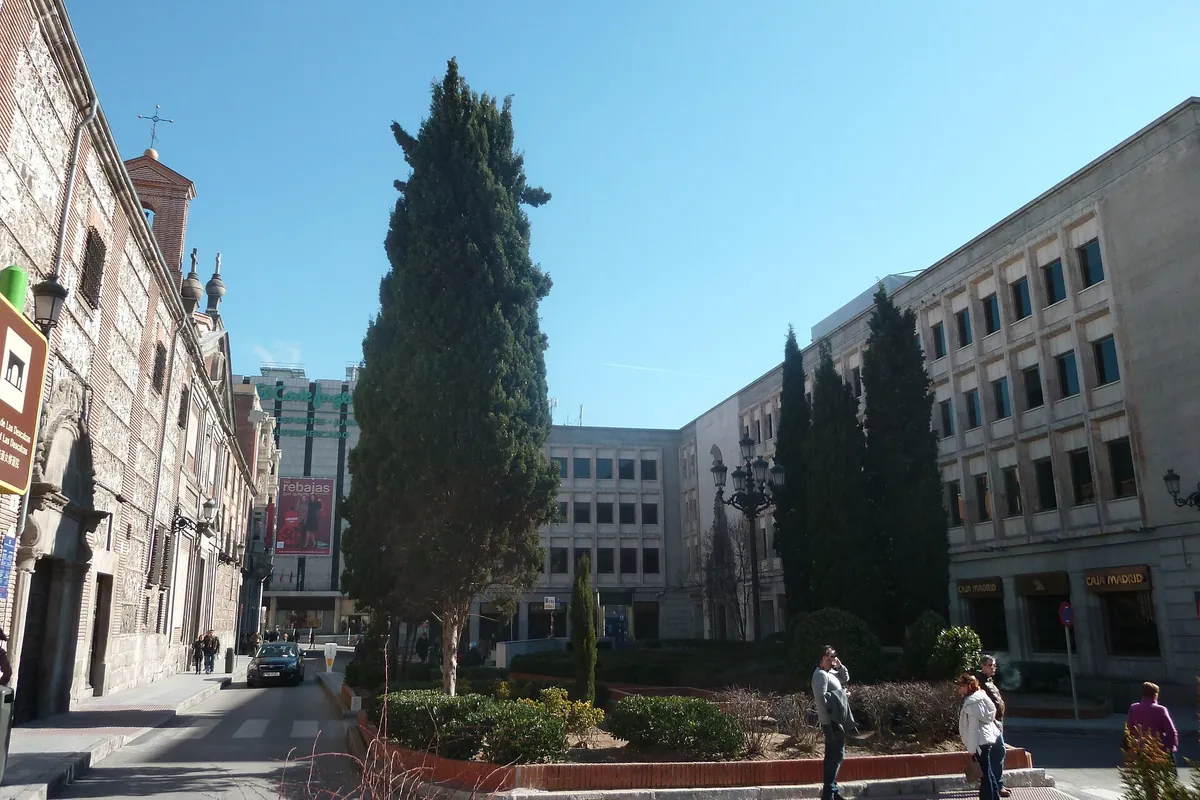
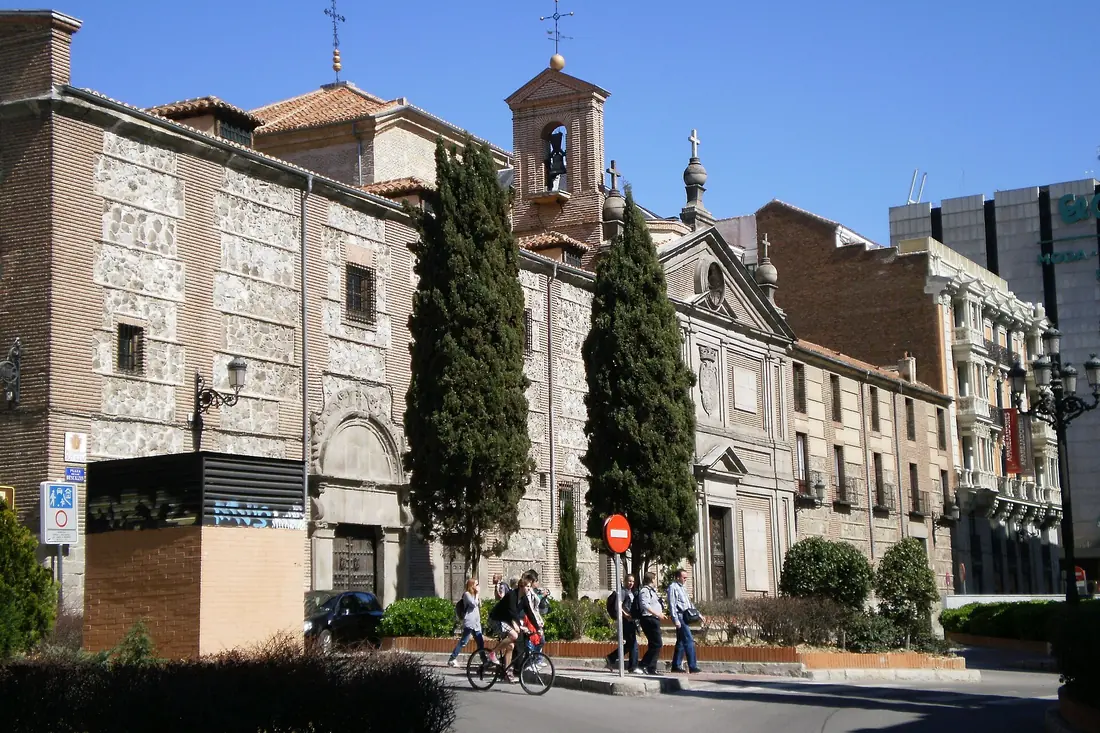
A typical visit starts outside on Plaza de las Descalzas. You find the small brick-and-granite door — the only thing marking the convent from the square. Your guide meets you at the ticket desk, explains the house rules, then leads you up.
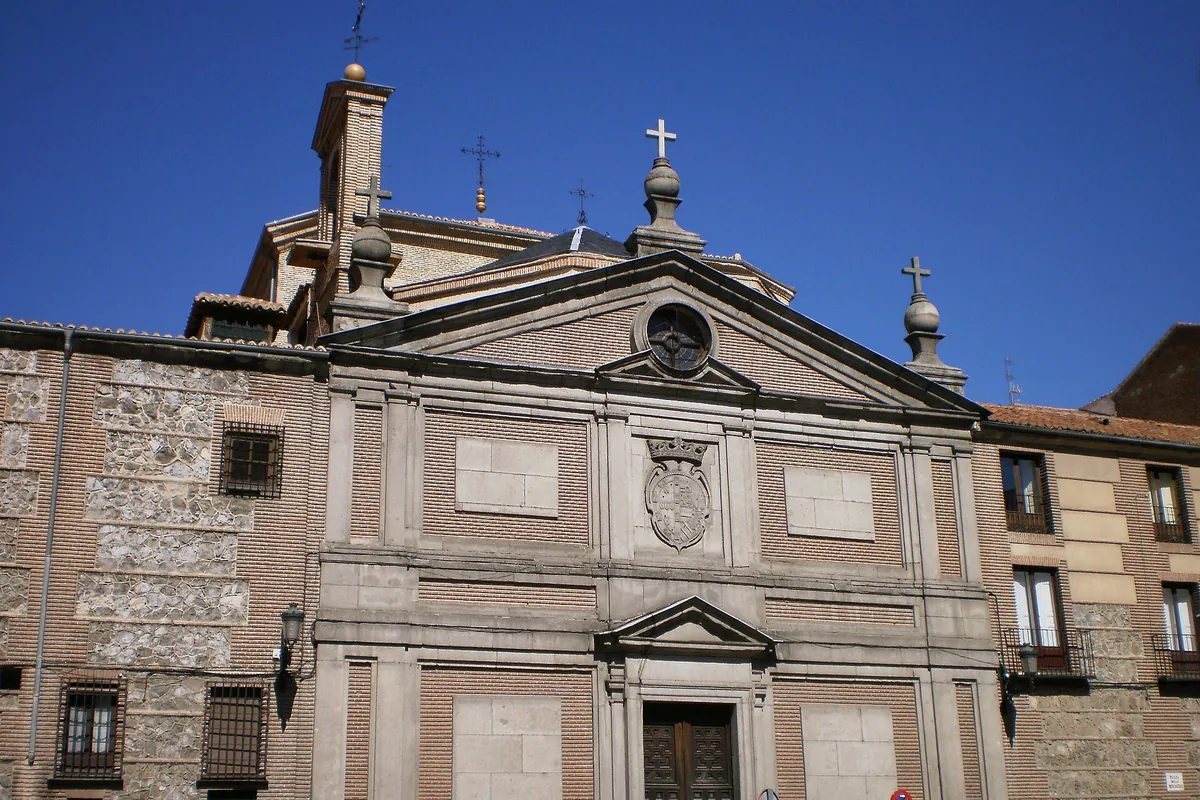
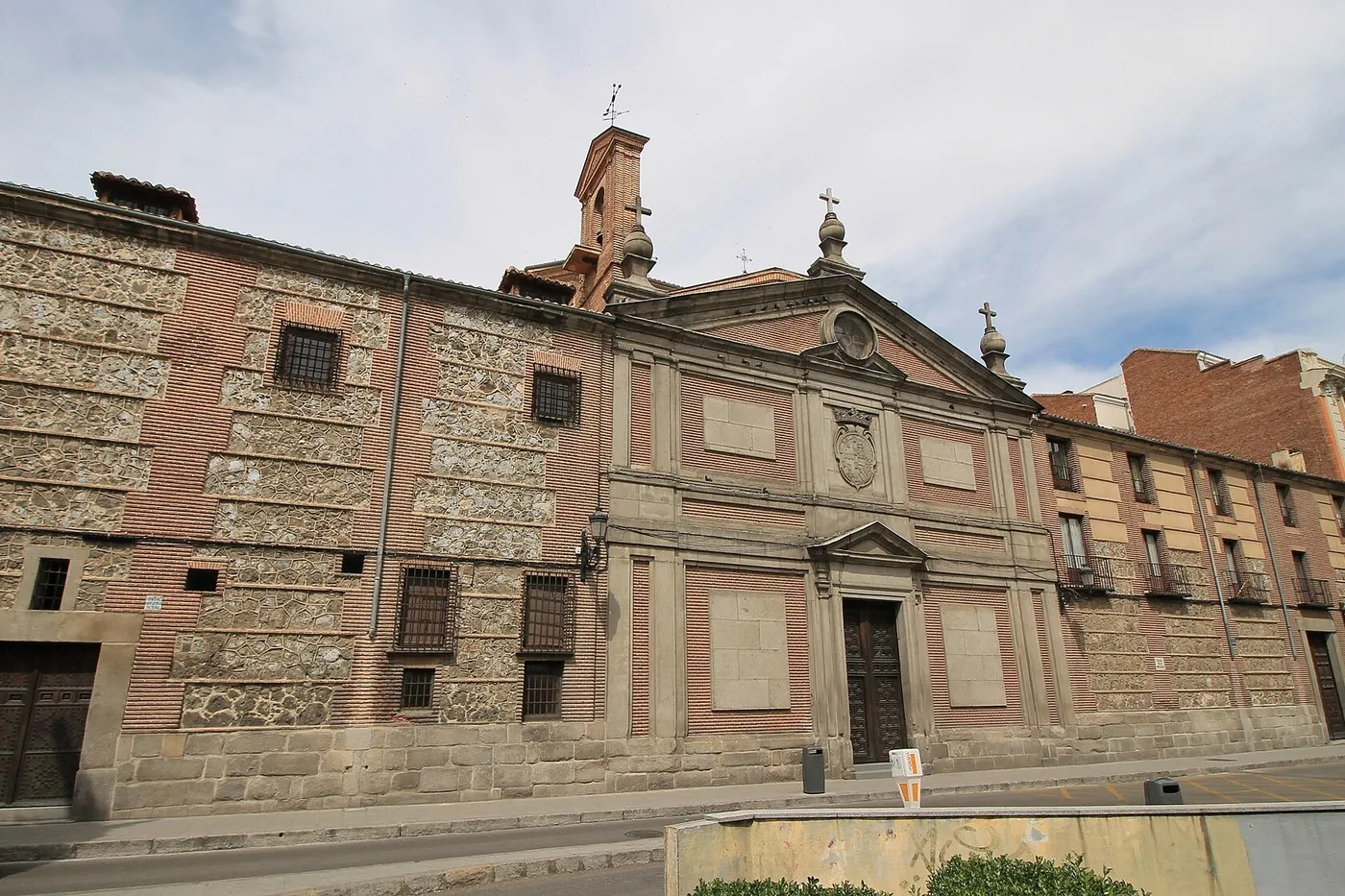
- The unmarked door — A plain brick-and-granite front facing a small square, two minutes from Sol. You’d walk past it without noticing.
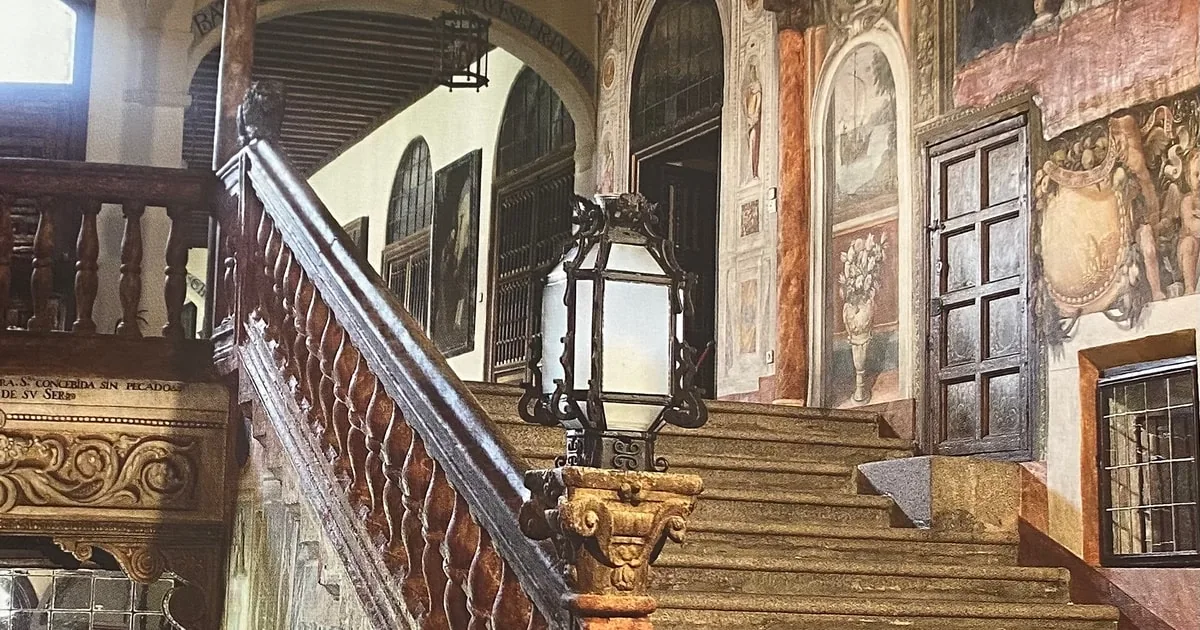
- The grand staircase — Walls and ceiling covered in seventeenth-century frescoes by Antonio Rizi. The ceiling glorifies Saint Clare. This is the moment the visit turns.
- The upper cloister chapels — Each chapel endowed by a noble family, each one different. Your guide will rush some; look at the carpentry and gilding yourself.
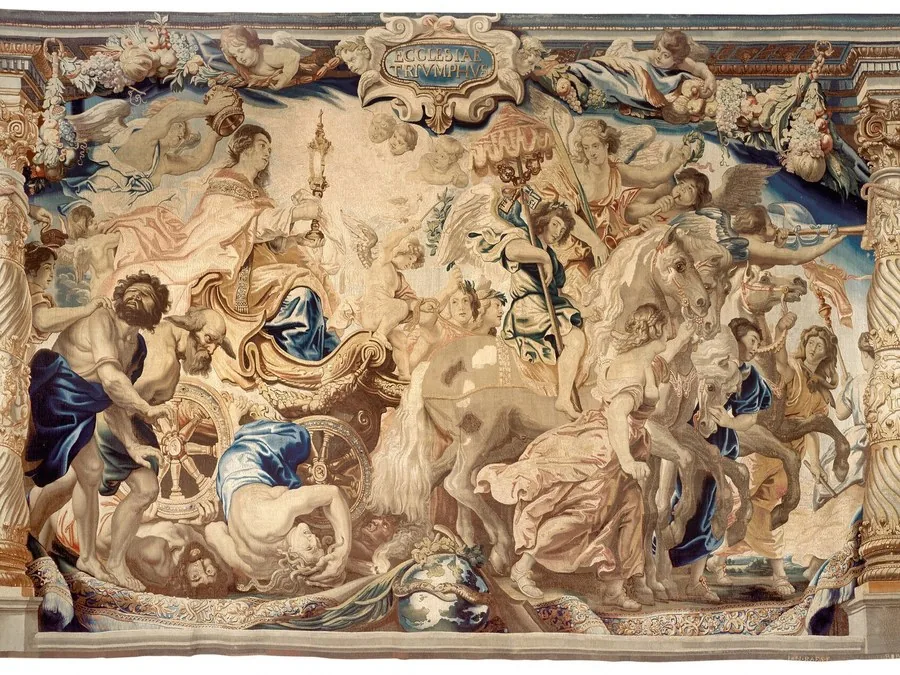
- The Rubens tapestries — Brussels silk, wool and silver thread, cartoons by Rubens himself. The Triumph of the Eucharist. One of the most valuable textile sets in Spain.
- The relicario — A room of reliquaries — pieces given by queens, many made by Flemish silversmiths. Your guide explains the provenance; details matter here.
- The church and tombs — The presbytery holds Juana de Austria in her kneeling orant statue. The choir has María and Margarita. The visit ends here; the cloister proper is closed.
- Back onto the square — You emerge where you came in. Most people have a coffee nearby and then head to the Royal Palace or the Prado.
The whole walk takes about 60 to 90 minutes depending on the guide and how many people linger at the tapestries. From here you can walk to the Royal Palace or Royal Collections Gallery, or take the Metro two stops to the Prado.
The €39 guided tour with entry, in one click
Skip-the-line entry, English-language guide, reserved slot, free cancellation.
Which tour is right for you?
Three very different ways to spend your Madrid time — here is how they stack up.
| The monasteryRoyal Monastery of the Barefoot nuns: Guided Tour + Tickets | Madrid: Royal Palace Skip-the-line Guided Tour | Madrid: Royal Collections Gallery Entry Ticket | |
|---|---|---|---|
| Price | €39 | €34 | €18 |
| What you see | Convent & tombs | Royal Palace & gardens | Art & immersive rooms |
| Duration | 1–2 hrs | 2 hrs | Self-paced |
| Language | English guide | English guide | English audioguide |
| Best for | Habsburg history | Palaces & royalty | Art after the convent |
| Rating | 4.7★ | 4.8★ | 4.7★ |
| Book this → | View → | View → |
Photo Gallery
The Rubens tapestries you will stand in front of
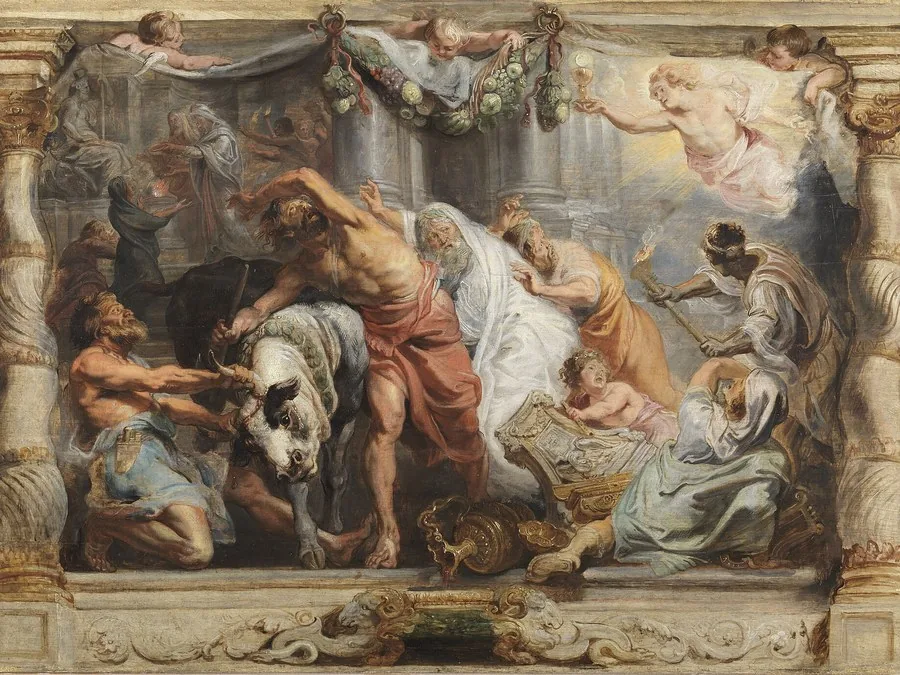
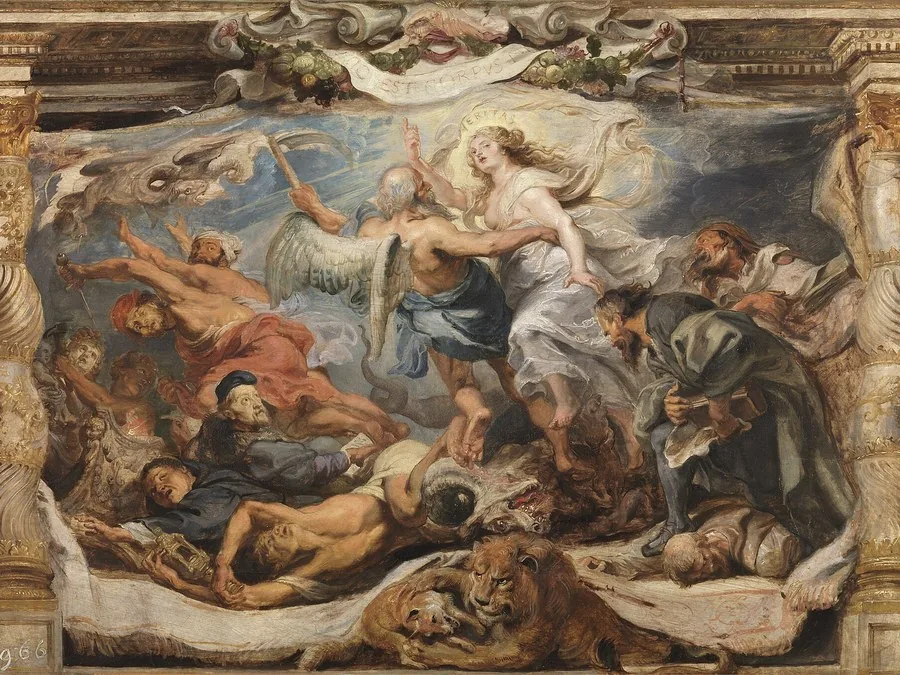
Cameras are not allowed inside, so there are no interior photographs of the monastery to show you. What there is, in the public domain, is better: Rubens’s own oil sketches for the Triumph of the Eucharist series, the cartoons the Brussels weavers worked from. The woven versions hang in the Descalzas. This is what you will be looking at.
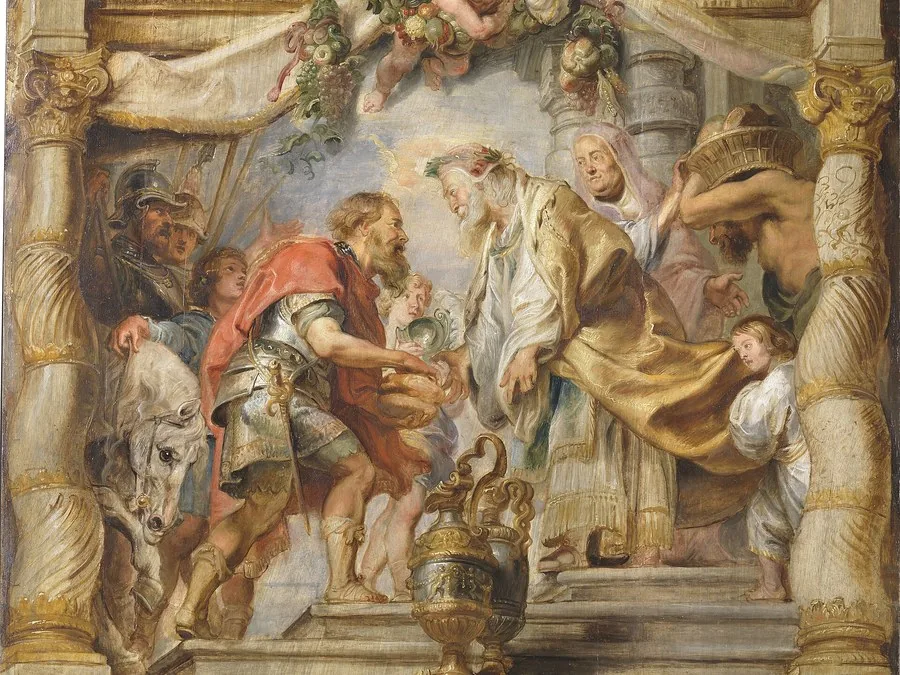
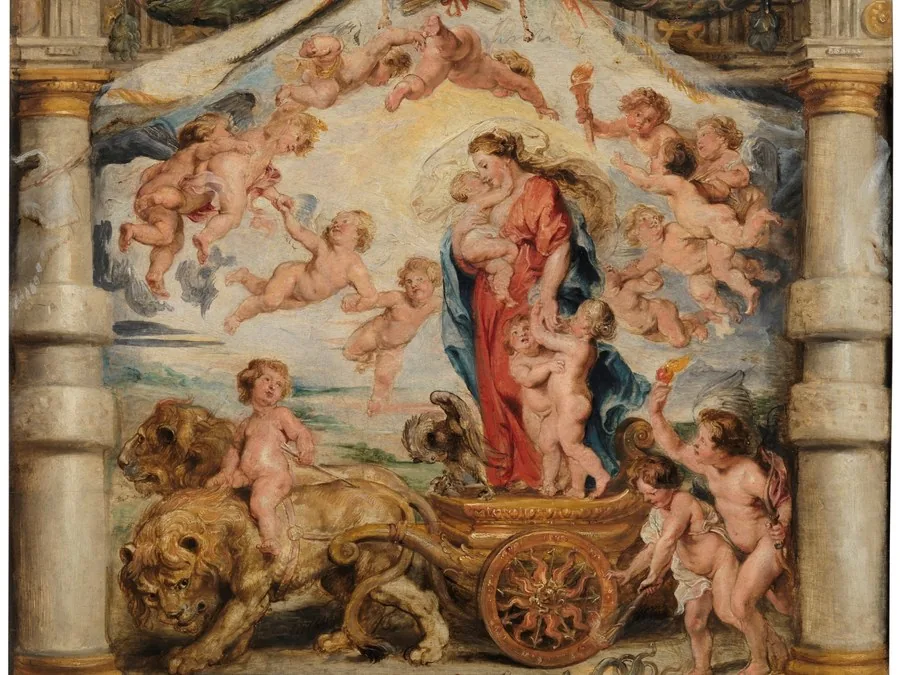
Tours for the rest of your Madrid day
The monastery is a 60–90 minute visit. After the Descalzas, here are the tours that fit the afternoon.
 Enters the monastery
Royal Monastery of the Barefoot nuns: Guided Tour + Tickets
 Best guided tour
Madrid: Royal Palace Skip-the-line Guided Tour
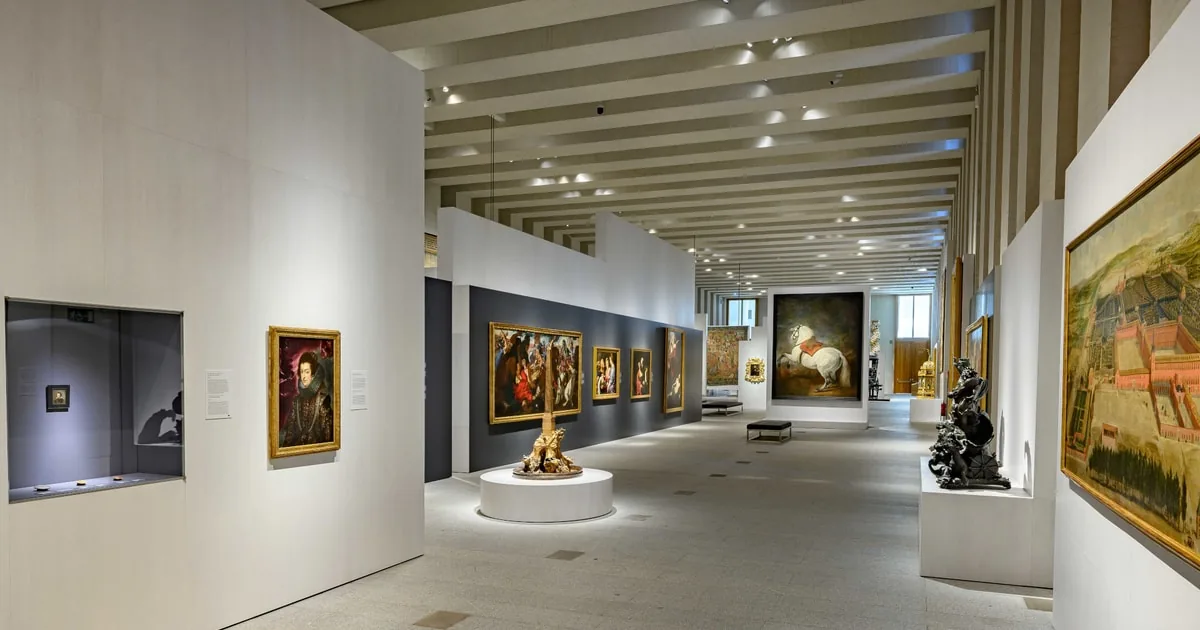 Habsburg treasures
Madrid: Royal Collections Gallery Entry Ticket
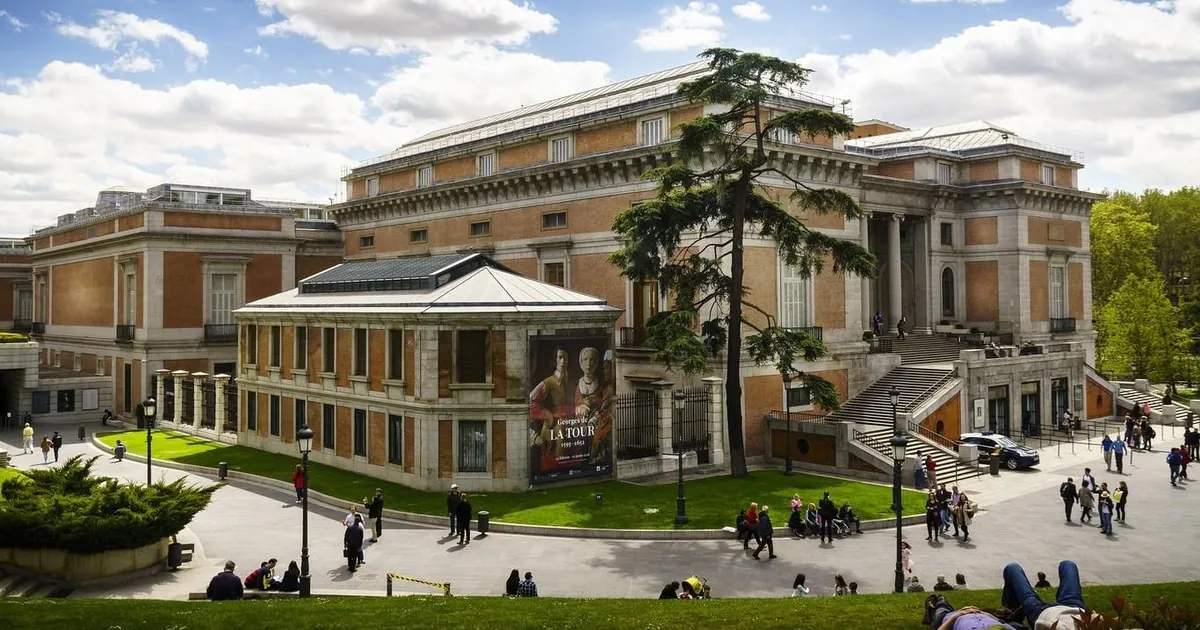 The great paintings
Madrid: Prado Museum Guided Tour with Skip-the-Line Ticket
 Highest rated
Madrid: Welcome to Madrid Guided Walking Tour
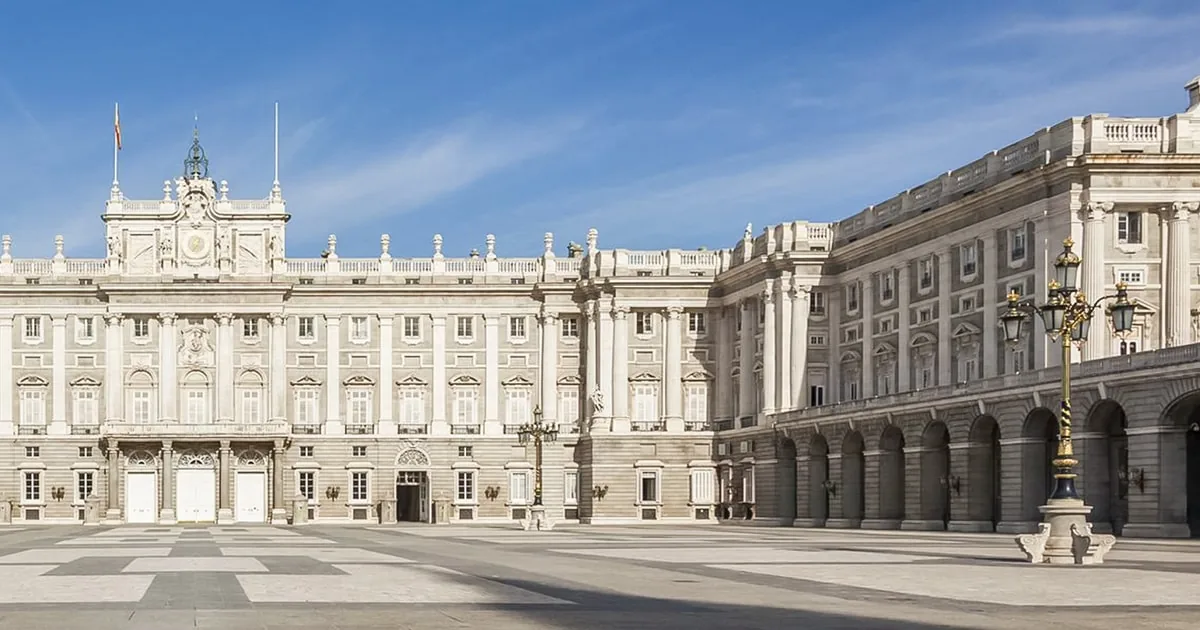 Most booked
Madrid: Royal Palace Fast-Access Admission Ticket
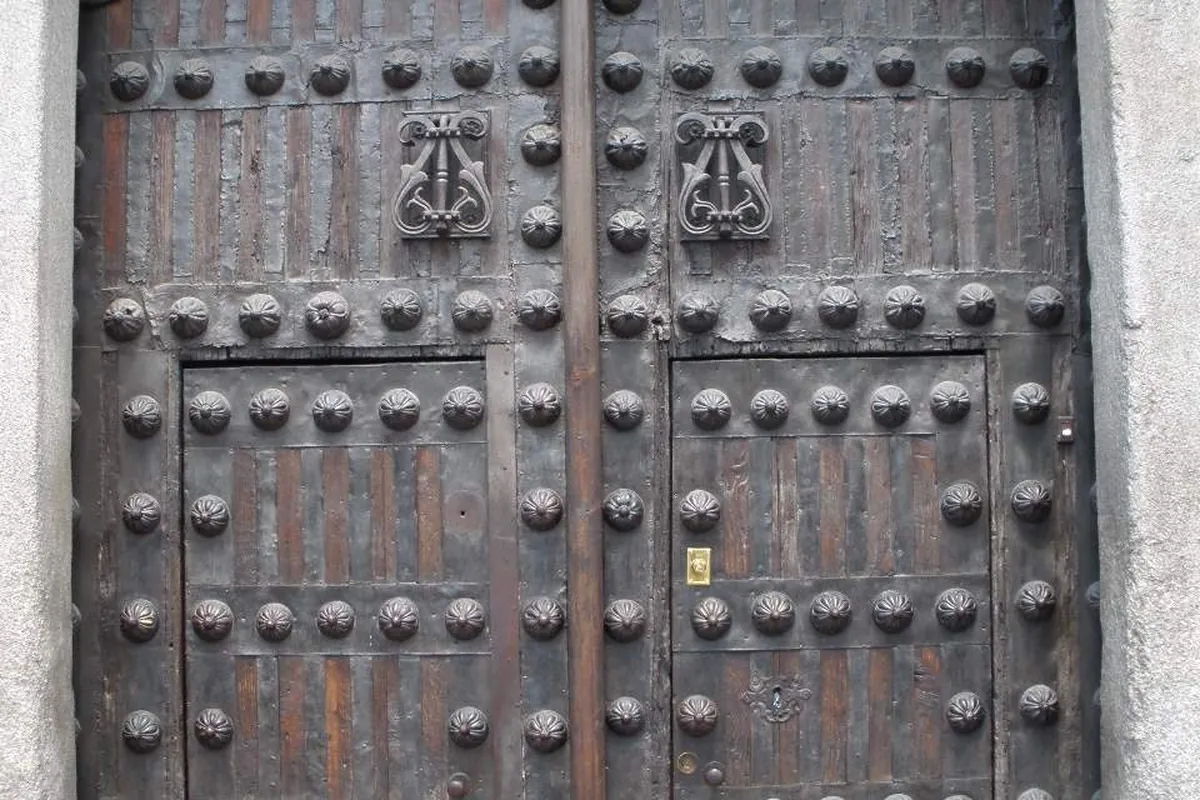
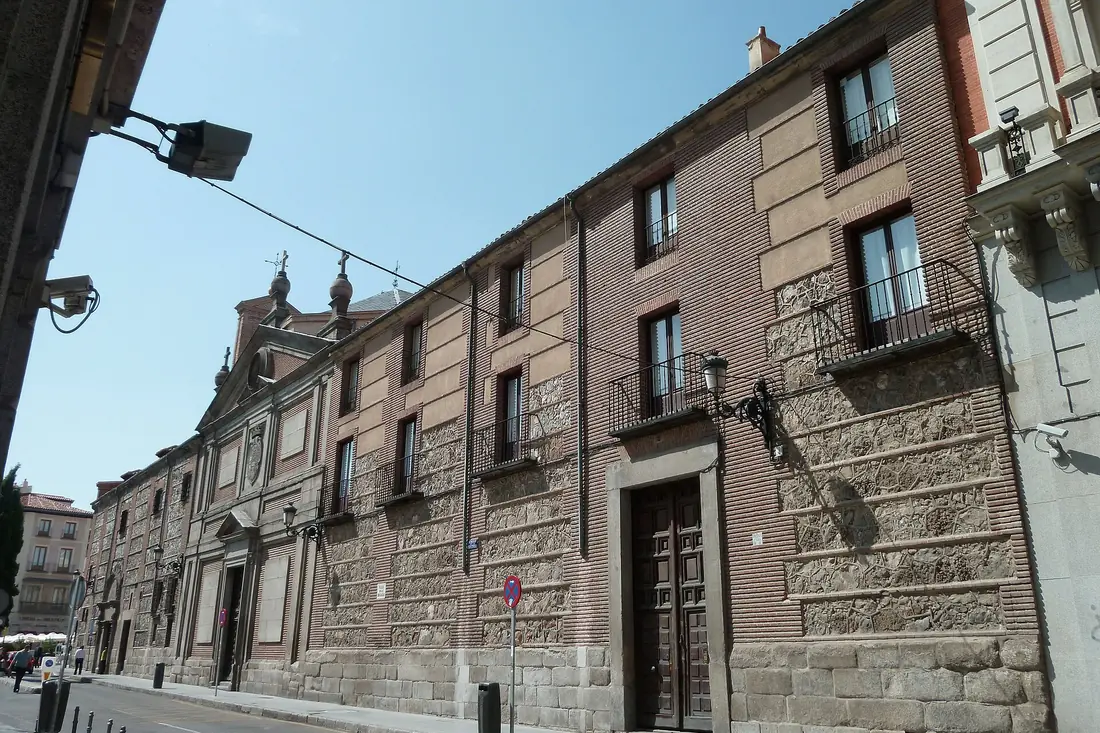
This is what the Descalzas Reales actually looks like
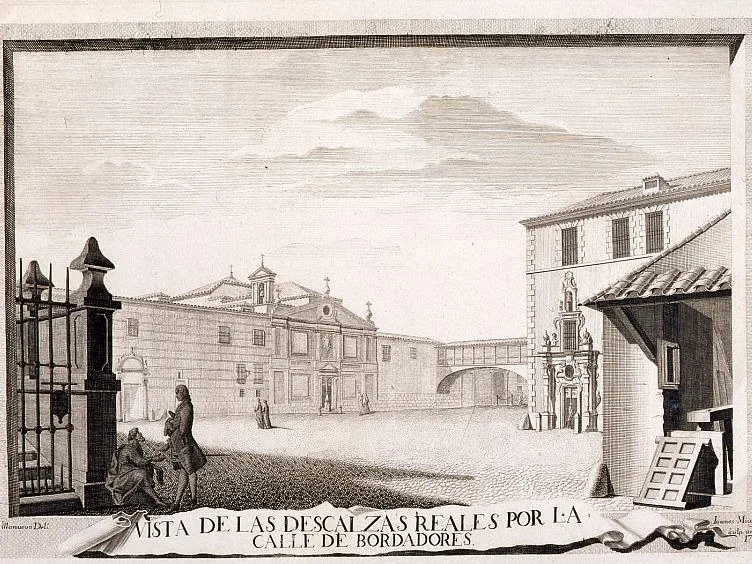
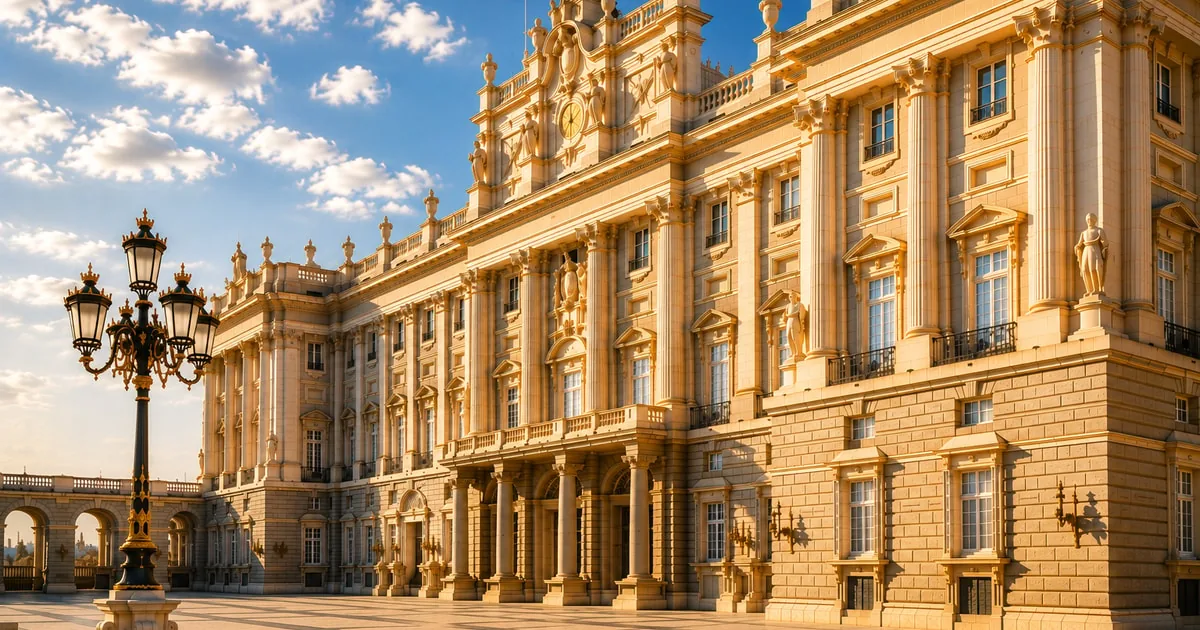
Every one of these is an exterior shot — cameras are not allowed inside, so this is the whole of what you can photograph yourself. Click any photo to see it full-size.
What guests say about the Descalzas tour
Reviews from travellers who booked.
The guide was competent and attentive, explained the history and the artworks very well.
Very good, interesting, a very good guide.
It was OK, but it was expensive. It’s better to book directly.
A knowledgeable guide, good pace, the right amount of time to take everything in.
A fantastic storyteller who showed the group how to find the history themselves.
Pleasantly surprised the ticket included an English tour, and the guide was excellent.
Ratings and reviews are the operators’ live GetYourGuide figures. Read our full tour reviews ›
Quick answers before you book
A few things worth knowing so you spend your time enjoying the monastery, not the logistics.
€9 or €39 — which should I pay?
The €9 Patrimonio Nacional ticket is the direct way in. Spanish is the default guide language. Pay €39 if you need English guaranteed, or if you want someone to reserve your slot. See the full ticket comparison.
When can I go?
Tuesday–Saturday 10:00–14:00 and 16:00–18:30. Sunday 10:00–15:00. Closed Mondays. Last entry is an hour before closing. Full hours by day and why the midday closure catches people out.
Do I need to book ahead?
You can buy the €9 ticket at the desk if it isn’t full, but reservation is safer. Book online or by phone.
What should I bring?
It’s cold inside in winter. Shoulders must be covered — a cardigan or scarf. No beachwear. Comfortable walking shoes. Your booking confirmation. See dress code and what to bring.
Can I take photos?
No. Photography and video are not allowed inside. You can shoot outside on the square. Why photos are banned, and what you can capture outside.
Who is actually buried there?
Juana de Austria (founder, 1535–1573), María de Austria (Holy Roman Empress, 1528–1603), and Margarita de la Cruz (her daughter, 1567–1633). The full history of these three women and why they ended up in a convent.
Can’t make these dates?
Browse more available Descalzas Reales monastery and find one that fits your schedule — all with instant confirmation and free cancellation.
The Descalzas Reales, explained
I have walked through this place more times than I can count. In Spanish and English. With guides who know the history cold and guides who rush past the Rubens tapestries like they are wallpaper. With groups of twenty and groups of four. What I have learned is this: the Descalzas Reales is one of the best things to see in Madrid, but only if you understand how to visit it. It is not like other museums. You do not buy a ticket and wander freely. You show up at a time slot, a guide takes you through in a group, and you either listen or regret it for years. Here is what actually matters.
Why a royal palace became a barefoot convent
In 1559, Juana de Austria — daughter of Emperor Charles V, sister of Philip II, mother of King Sebastian of Portugal — converted her own palace into a convent. She was thirty-four and a widow. The Poor Clare nuns she brought in followed the reformed rule: no possessions, no shoes, poverty as spiritual practice. The name “Descalzas Reales” means the Royal Barefoot Nuns. Juana lived here for the last fourteen years of her life and died at El Escorial in 1573. Her tomb, with her kneeling in prayer, is in the church presbytery. You see it at the end of the visit, if the guide does not rush.
A working convent still sits here. You do not see the cloister proper. Visitors walk the parts that were once the royal quarters. It is an important distinction. This is not a museum that happens to be in a building where nuns also live. It is a functioning community of sisters that permits visitors in rooms they have opened. That changes how you move through the space. You are a guest in a working convent, not a customer in a museum.
The moment the visit turns: the grand staircase
From the street, the building is plain. Brick and granite. A door you would walk past without noticing. You might think you have the wrong place. Then you climb the grand staircase. Every wall, every surface of the ceiling is covered in seventeenth-century fresco. The ceiling fresco of the glorification of Saint Clare is by Antonio Rizi. It is a moment of shock. A severe front, then this. That is when you understand why you are here.
Your guide will explain the frescoes. Or will not. I have seen both. The better guides linger and let you look. The rushed guides move you along after thirty seconds. If your guide is the rushing type, glance back as you leave the room. The composition and the light and the detail matter. You have paid to be in this room. Look at it properly.
What the art is doing in a convent
The monastery holds some of the finest painting and textiles in Madrid. Titian. Brueghel. Bernardino Luini. Luca Giordano. And the Rubens tapestries — the Brussels series of the Triumph of the Eucharist, woven in silk, wool and silver thread from cartoons by Rubens himself. One of the most valuable textile sets in Spain. Why? Because dowries. A working convent was a refuge and a charity house for royal women who had nowhere else to go or whose marriages ended. They brought their wealth with them. Isabel Clara Eugenia, the Infanta, sponsored the Rubens tapestries. María de Austria, the widow, retired here with her daughter Margarita and brought a lifetime of collecting. Those tapestries paid for their keep. The art is not in this convent because it is a museum. It is here because queens and royal women brought it when they became nuns.
The relicario is a room of reliquaries — pieces given by queens, many made by Flemish silversmiths. Madonna and Child sculptures, pieces of the True Cross, reliquaries holding pieces of saints. Your guide explains the provenance of each piece. It matters. These objects are the reason the Descalzas exists. They are the wealth of the community.
The practical reality: slots, guides, no cameras
You cannot simply walk in. Entry is guided only, in timed slots with no surcharge. Capacity is limited both to protect the rooms and respect the community. The Patrimonio Nacional ticket is €9. Reserve online at tickets.patrimonionacional.es or buy at the desk if space exists — it fills on weekends. Spanish is default; the GetYourGuide tour (€39) guarantees English and free 24-hour cancellation.
Photography and video are not allowed inside. It is non-negotiable and enforced. You cannot Instagram your way through a working convent. You have to be present. Pay attention. It is actually a gift, though it does not feel like it at the time.
Who goes and what to expect
The visit runs 60 to 90 minutes depending on the guide. It is not suitable for people with mobility impairments — there are stairs throughout. Not for people who need to photograph everything. Not for people who want to wander at their own pace. Perfect for anyone interested in sixteenth-century painting, Habsburg history, or the lives of royal women. The guides are professional and trained by Patrimonio Nacional. You cannot choose your guide, but the knowledge is consistent. Book the visit, show up on time, listen, and look at the staircase.
The bottom line
The Descalzas Reales is worth visiting if you care about the Habsburgs or sixteenth-century painting. It is specific, quiet, and real. Not a blockbuster. Not a quick stop. If you want to wander freely or photograph everything, it is not for you. I would rather spend ninety minutes here than two hours at a museum full of souvenir shops. Book the visit. Show up on time. Listen. Look at the staircase. Then get a coffee on the square before heading to the Prado.
Frequently asked questions
Who is buried in the Descalzas Reales?
Three major figures: Juana de Austria, who founded the monastery in 1559; her sister María de Austria, the Holy Roman Empress; and Margarita de la Cruz, María’s daughter. The full history of these three women and what brought them to a convent.
Can you visit without a tour?
No. Entry is guided only, in small timed groups. The guide is included in the ticket — there is no surcharge. How to reserve your time slot.
How much is a ticket to the Descalzas Reales?
The Patrimonio Nacional ticket is €9 general admission, €8 for groups. Buy at tickets.patrimonionacional.es or at the desk. The GetYourGuide guided tour is €39, entry included. Which option is right for you.
Is the Descalzas Reales open on Mondays?
No. It is closed every Monday, all year. Open Tuesday–Saturday 10:00–14:00 and 16:00–18:30; Sunday 10:00–15:00. Full schedule and why midday is a trap.
Are there audio guides?
No. A human guide is included in every ticket. You walk the monastery in a group with your guide. Guide languages and when to book English specifically.
What are the must-see artworks?
The Rubens tapestries of the Triumph of the Eucharist (Brussels, silk and silver thread). The grand staircase by Antonio Rizi. Paintings by Titian, Brueghel and Luca Giordano. The relicario. What each artwork is and why your guide will rush through it.
How do I get there from the airport?
Take Metro line 8 from any terminal to Nuevos Ministerios, change to line 10 towards Tribunal, then line 1 to Sol — it’s two minutes' walk from there. Or take the airport express bus to Cibeles and walk fifteen minutes. Full Metro and bus options, and why the square has no parking.
Still have questions? Email us [email protected]