Who Is Buried at the Descalzas Reales
Juana de Austria: the founder (1535–1573)
Juana was the daughter of Emperor Charles V, the sister of King Philip II of Spain, and the mother of King Sebastian of Portugal. At twenty-four, she was regent of Spain while Philip was in the Netherlands. At thirty-eight, she was dead, and she had founded a convent. Her tomb, carved with a kneeling orant statue (a praying figure), is in the church presbytery where you see it as you walk through.
In the 1550s, Juana owned the palace that sits on Plaza de las Descalzas now. She was a widow and had decided to withdraw from court life and take a reformed Franciscan vow. The Poor Clares, also known as the Order of Saint Clare, was a reformed women's monastic order founded in the thirteenth century; "descalzas" (barefoot) was their practice, a sign of poverty and austerity. In 1559, Juana converted her palace into the convent. The front stayed a plain brick-and-granite facade on an ordinary square so the place would not look grand or draw attention from the crown or the church authorities. Inside, though, she built a royal residence for herself and filled it with art.
Juana retired there in 1559 but died at El Escorial in 1573, thirteen years later. She was thirty-eight. Her tomb is in the church presbytery where the guide will point it out.
María de Austria: the Holy Roman Empress (1528–1603)
María was Juana's older sister, and she had a bigger life before she arrived at the Descalzas. She was born in 1528, married the Holy Roman Emperor Maximilian II, which made her Empress, and spent most of her adult life at the imperial court. After her husband died, she decided to leave Vienna and retire to the Descalzas. She was fifty years old.
María lived here for the next twenty-seven years in the royal apartments known as the Cuarto Real. She died on 17 February 1603, aged seventy-five, and her sepulchre is in the choir (the nuns' singing space, which is upper-level and not open to general visitors, but you walk past it or near it on the tour). She is buried alongside her daughter.
Margarita de la Cruz: the nun princess (1567–1633)
Margarita was María's daughter, born in 1567. Her father was the Holy Roman Emperor Maximilian II. Unlike her mother, Margarita did not retire to a convent because she was a widow or tired of court life; she chose it as a calling. She took vows as a Poor Clare nun in the convent founded by her aunt Juana. She lived and died here, at sixty-six, and is buried in the choir near her mother María.
Why this matters: the dowries that filled the church
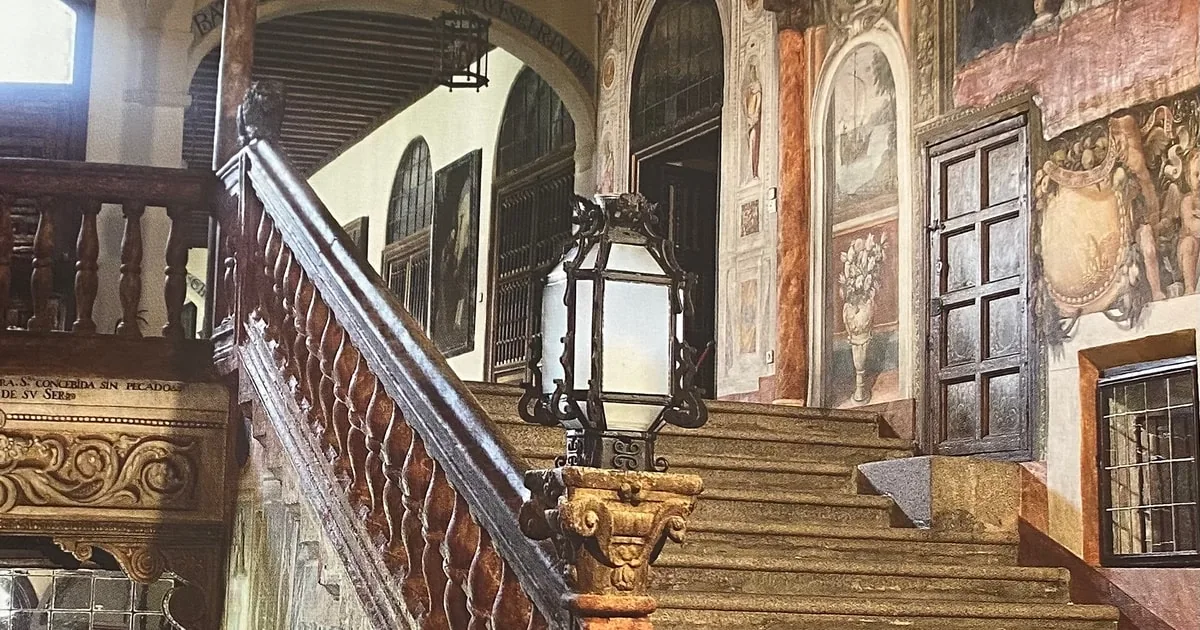
The convent was also a refuge for other royal women and the wives and daughters of the nobility who either could not marry or chose not to. Each woman who entered brought a dowry. The dowries of the royal women who entered — queens, empresses, princesses, and daughters of grandees — were substantial. Those dowries became the money that Juana used to commission the staircase fresco by Antonio Rizi, to buy the Rubens tapestries, to patron religious artists, and to fill the relicario with pieces from Europe's finest workshops. The three burials in the choir represent the entire purpose of the place: a sanctuary where royal and noble women could withdraw from the world, and where their wealth would be transfigured into devotion and art.
Frequently asked questions
Who is buried in the Descalzas Reales?
Three royal women. Juana de Austria (the founder, 1535–1573) is in the church presbytery. María de Austria (Holy Roman Empress, 1528–1603) and her daughter Margarita de la Cruz (a Poor Clare nun, 1567–1633) are buried in the choir. Read the full story above — it explains why a royal palace became a convent and how their dowries funded the art collection.
Who was Juana de Austria?
She was the daughter of Emperor Charles V and sister of King Philip II. She was regent of Spain at twenty-four, and at thirty-eight she converted her palace into a convent for reformed Franciscan nuns. She died in 1573.
What is the story of the Descalzas?
It was founded in 1559 as a refuge for royal and noble women. The dowries those women brought funded the art collection — the staircase fresco, the Rubens tapestries, the relicario, and the paintings. Three of the royal women who made this happen are buried here.